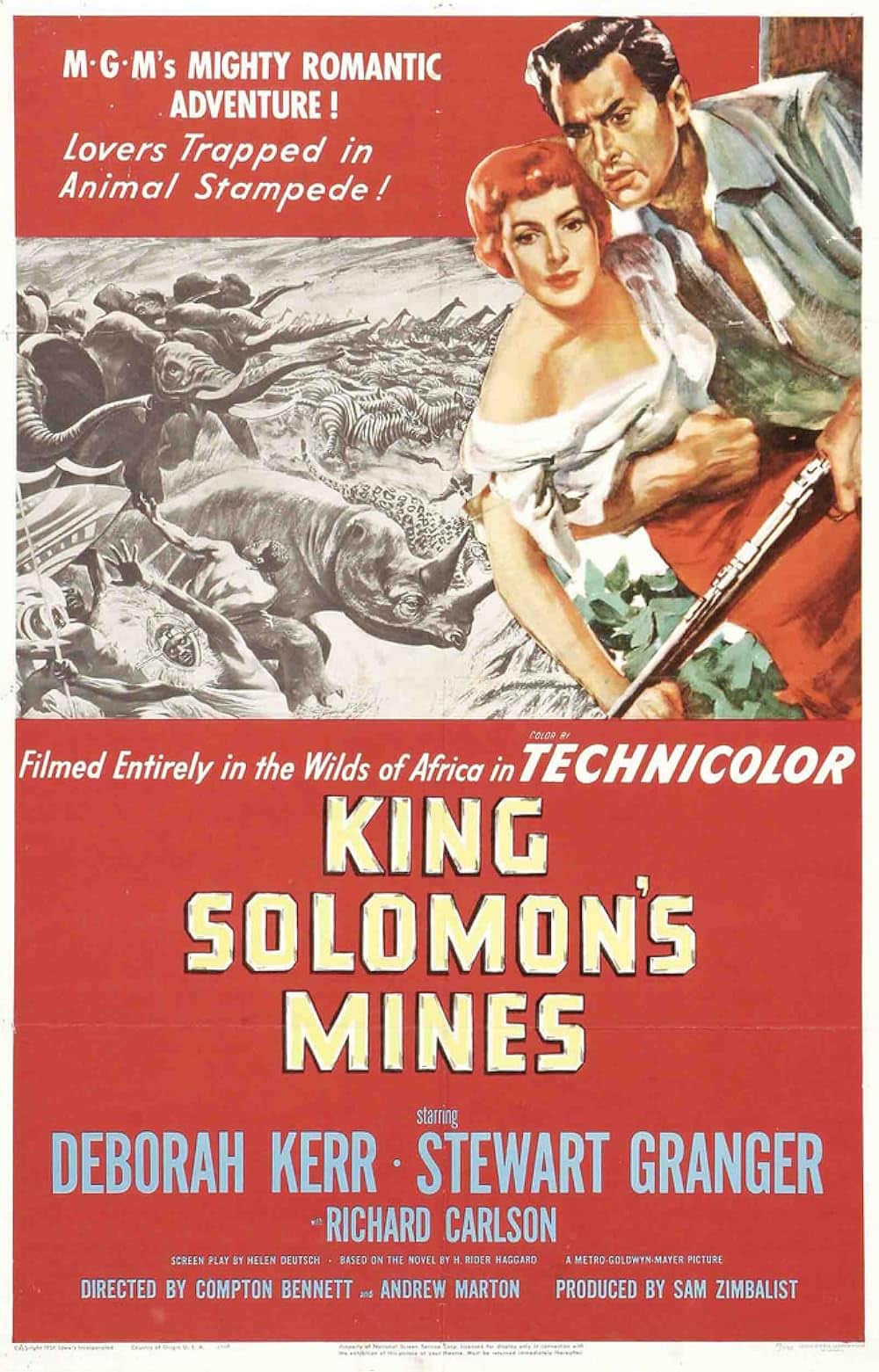
King Solomon’s Mines is based on the novel by the same name from 1885. 1950 wasn’t, however, the first time it was adapted for film. The first time it was filmed was already in 1937 and I think the 1985 comedy version with Richard Chamberlain and Sharon Stone is the most well known. For me personally, it’s hard not to draw parallels to that particular version. It was the first one I saw and I was at a really impressionable age at the time. Let’s just say I loved it!
And the 1985 version is probably also a great contributor to why my love for adventure movies has flourished over the years. I would also claim that there would be no Indiana Jones without the stories about Allan Quartermain and the likes. So, it’s fair to say that these stories have inspired more people than me. Steven Spielberg and George Lucas clearly drew some inspiration as well.
But back to the 1950 version of the movie. We get to follow a white man in Africa. An expert hunter with the speciality to lead other white Englishmen on hunting trips. Allan Quartermain is fair though, he understands the balance of nature and that you must respect the wilderness and the locals as well. I can’t say that it’s explicitly told in that way, but I get the impression that the thought of hunting for sport kind of disgusts him, but he still condescends to it to make a living.
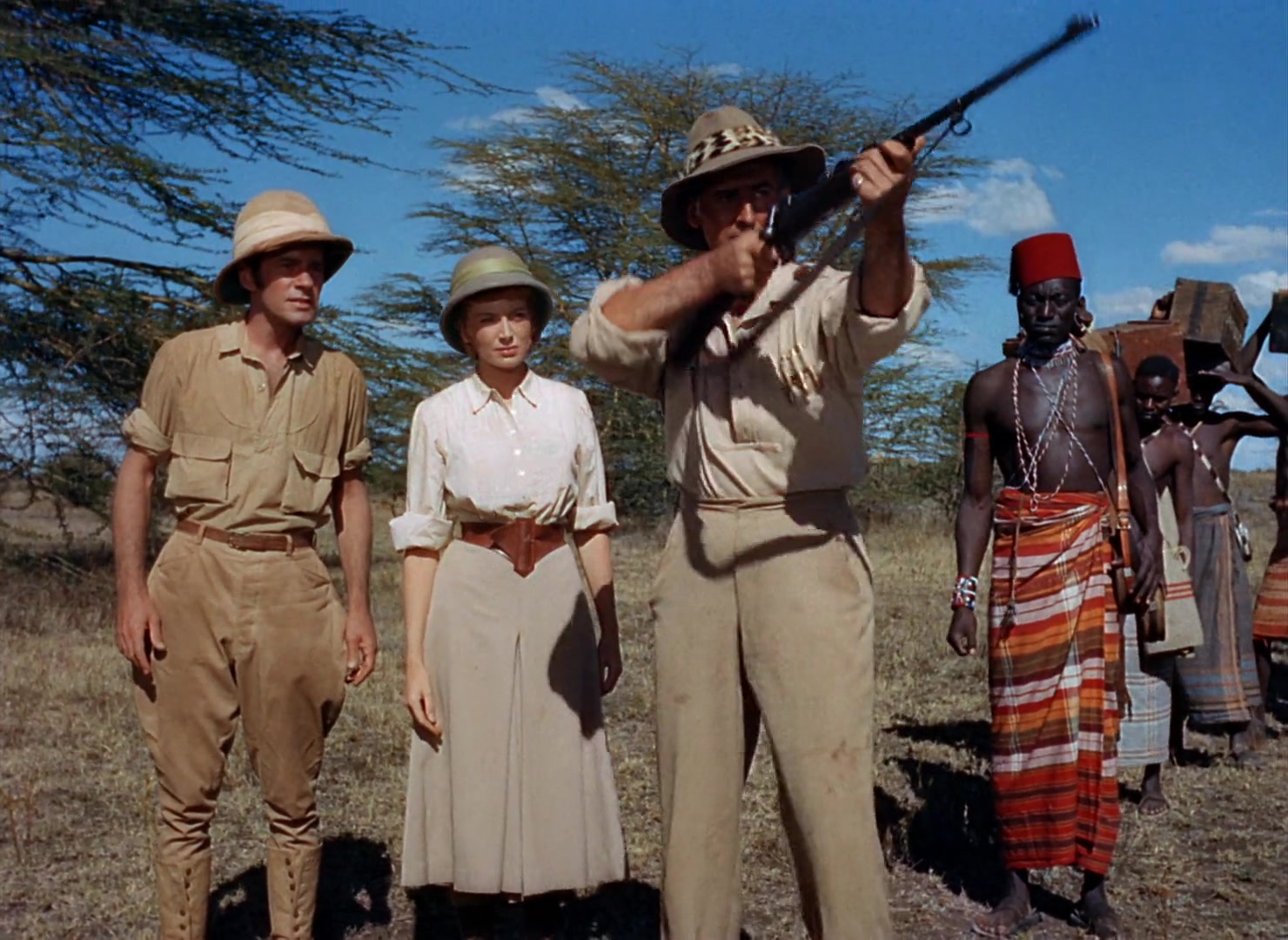
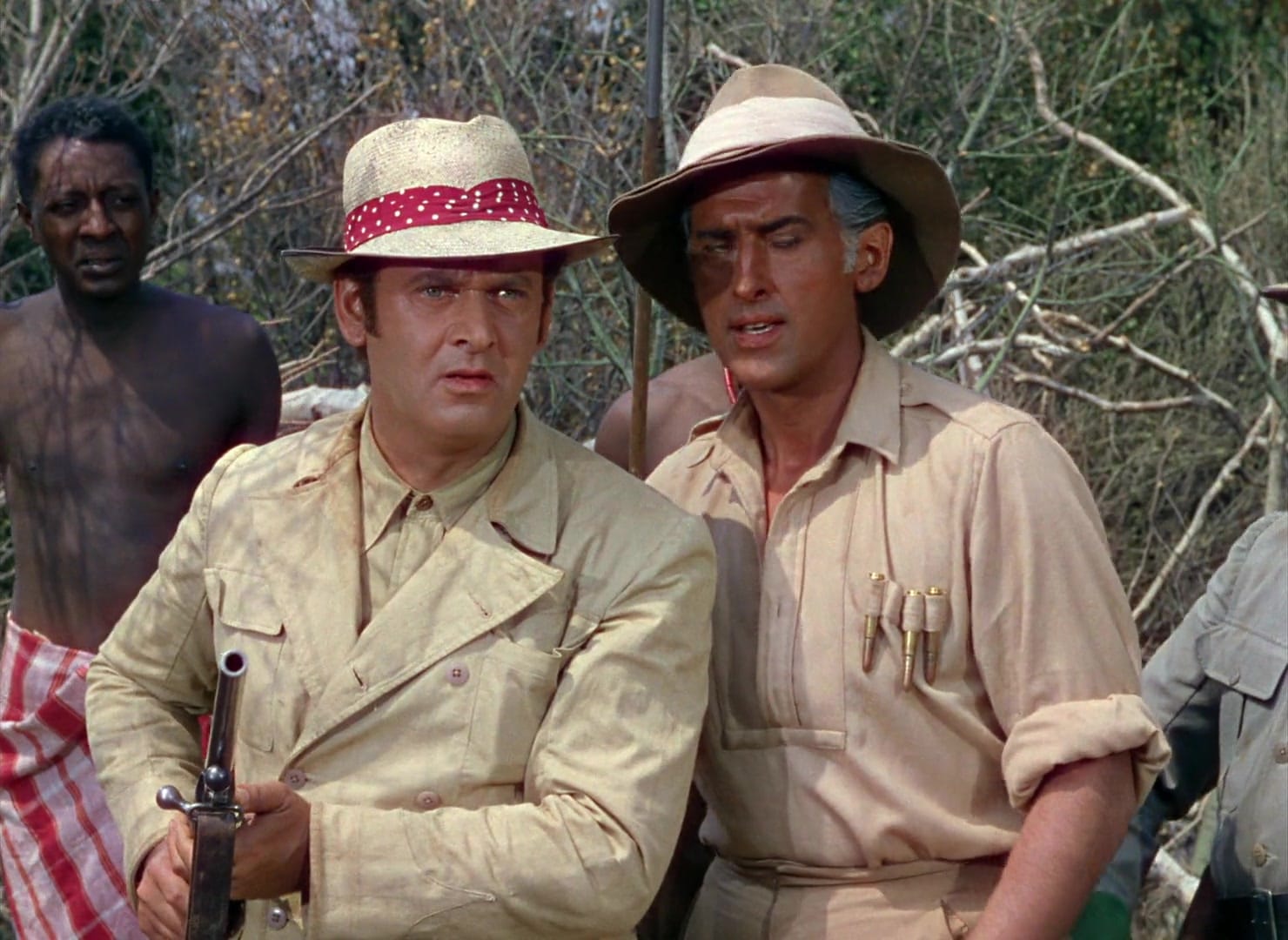
But even if he’s living in Africa with the natives and he clearly has a strong sense about right and wrong, you can still sense the racism in the story. It might not be the worst example I have ever seen but even if he’s always fair you can tell that the movie, or the story, never really treats black people as equals. It may be a leverover from how the world was viewed in 1885 or even in 1950 when the film was made. White man seems to be considered superior but this was during a time where the Brits still had colonies all over the world and when Belgian Congo was King Leopold II personal property.
Let’s put it aside for a moment. Let’s focus on the adventure instead. It starts out quite slow and the first part of the movie is quite uninteresting. It’s more about hunting and introducing characters than telling an interesting story. Of course, it is necessary to know who the people we are going to follow really are, what their driving force is and so on.
We are introduced to the English woman and her brother who want to hire Allan Quartermain as their guide. They are not after anything in particular nor do they seek wealth or even adventure really. They are there with the intent to find her husband that has gone lost somewhere in the neighbourhood. At first Allan doesn’t want the job, he feels like it’s no place for a woman to take part in such an expedition. And again I will give the film the benefit of the doubt. It’s a rather sexist and stereotypical point of view with today’s standards. But, as I said, considering it was written in 1885 and film in 1950 I take it that certain things were viewed differently.

When a huge amount of money is offered to him, he cannot say no though. I think he still wanted to, but at the same time he’s feeling that he’s living on borrowed time. I think he says that the average life expectancy for someone in his profession is 7 years and he had been at it for 15. He wants to provide something for his son, who’s back in England and reluctantly agrees.
The husband had gone lost during an expedition a couple of years before when he was looking for King Solomon’s Mines, a place surrounded by myth. Allan doesn’t believe in it and he believes that the map he apparently mailed to her of the area he was trying to explore is fake. In fact, in official maps the whole area is greyed out. No one knows what’s there, it’s just surrounded by stories and by tales of how no one has ever come back from that region. Pretty typical stuff.
Well, they start the expedition and things go like you think. She’s not suited for the wilderness. There are bugs, wild animals and poisonous snakes. But still she refuses to give up. I would say that the way Alla Quartermain tries to convince her to do just that – give up, encourage her to go on even more. She cannot let him decide for her. She’s the one with the money and she will do anything to find her husband.
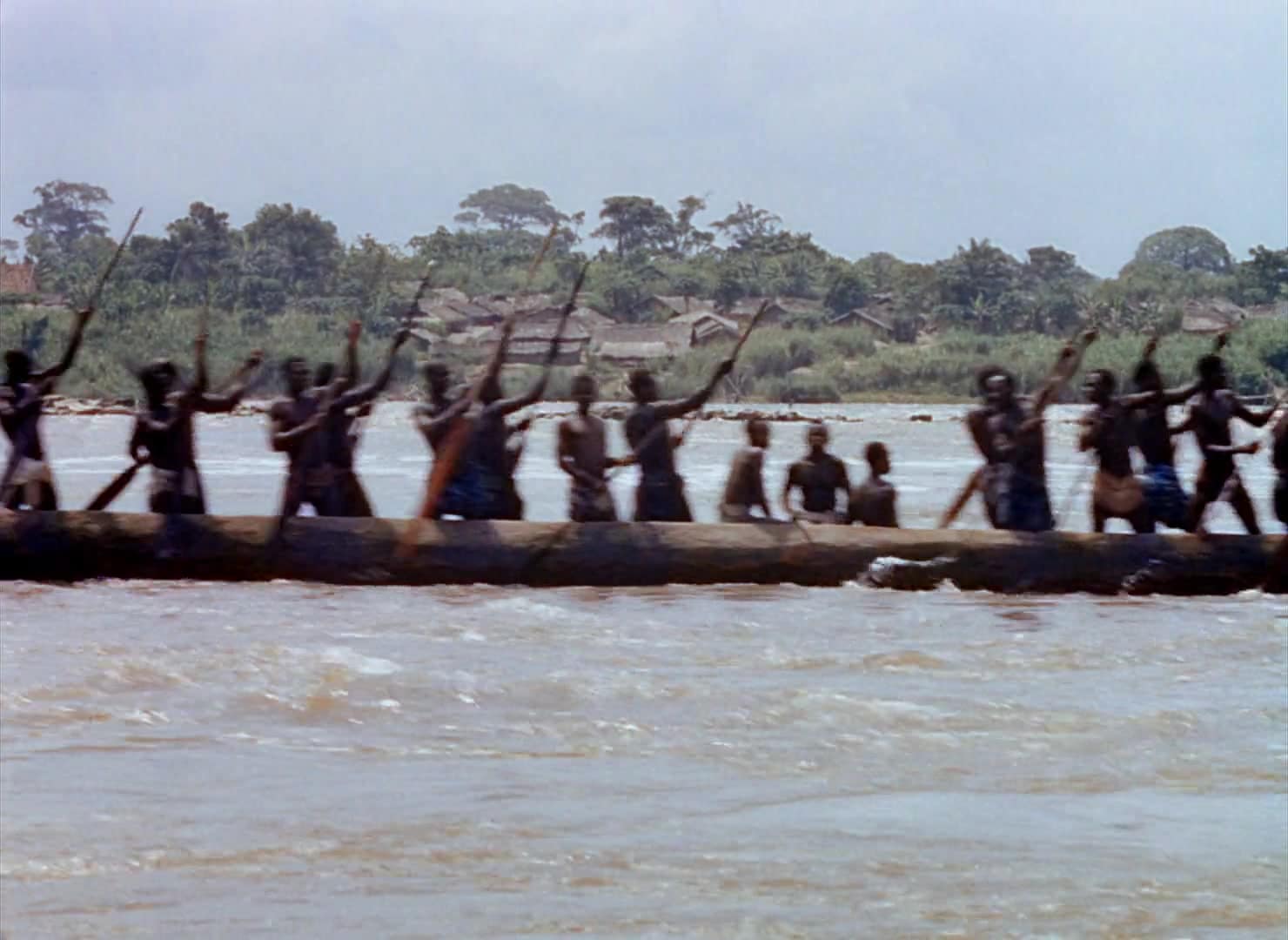
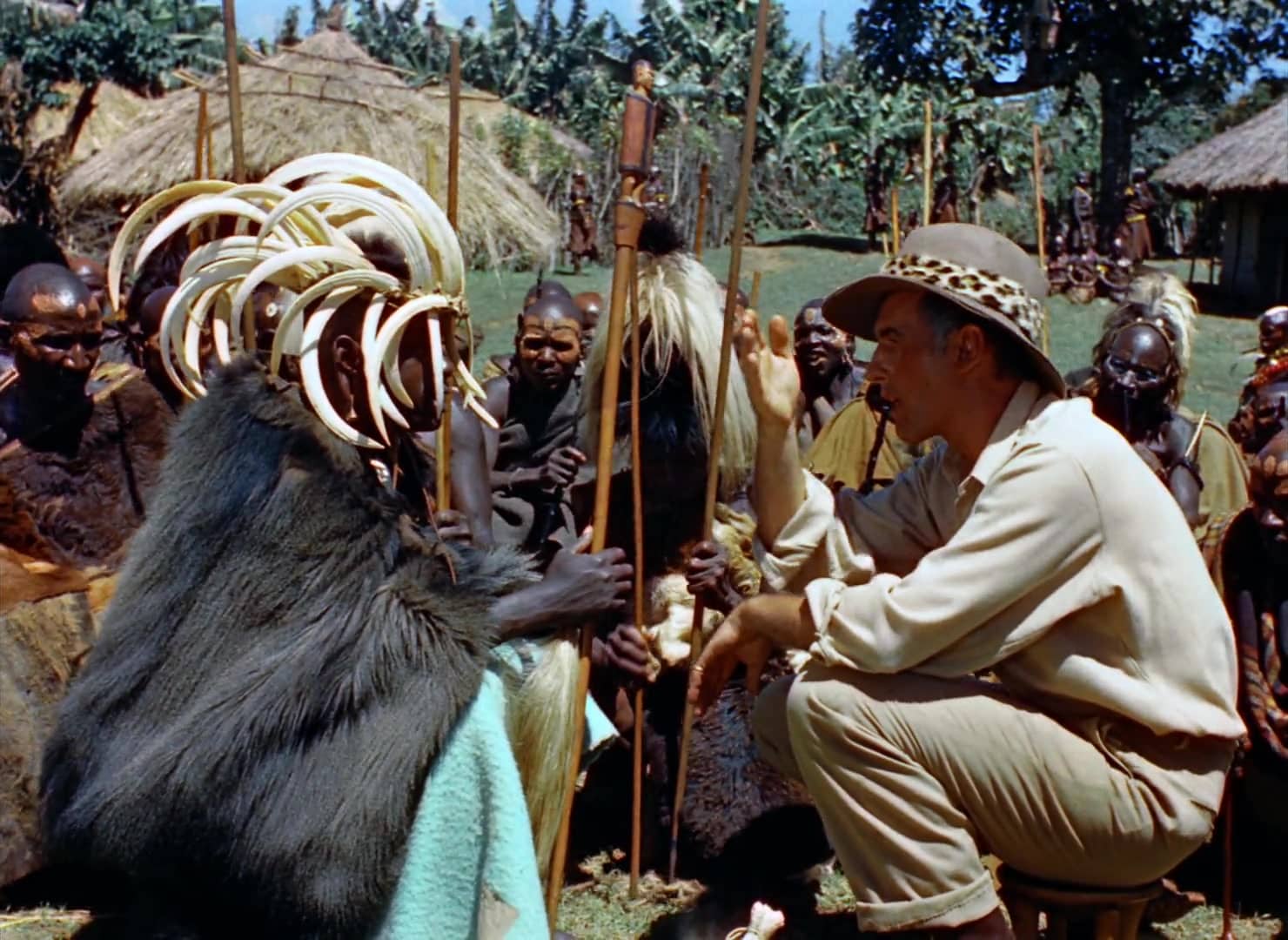
Of course, along the way she adapts and he gains more and more admiration for her. I think it might have been a bit controversial at the time but there’s definitely romantic feelings coming up to the surface from both of them. And this during the search for her lost husband.
Most of the film is about the way to get somewhere, it’s more about the adventure itself than to get to any form of conclusion. I can’t say that I hadn’t wanted a bit more elaboration about the mystery about the mines themselves and the people who’re there to protect it from the outer world. But the main thing is about the adventure, I have no problem with that. I do think the end is quite abrupt though. When the adventure is over, it just…ends.
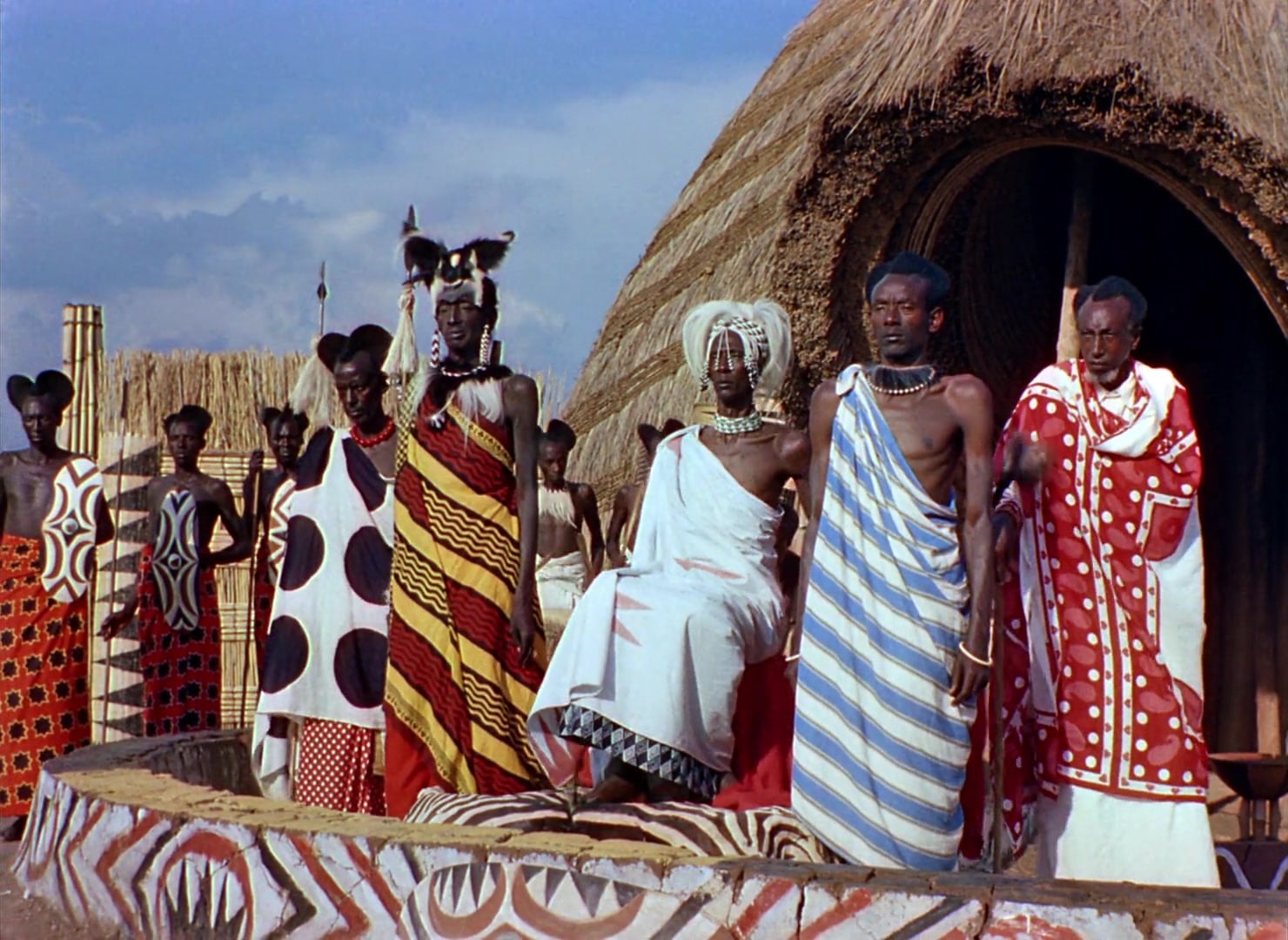

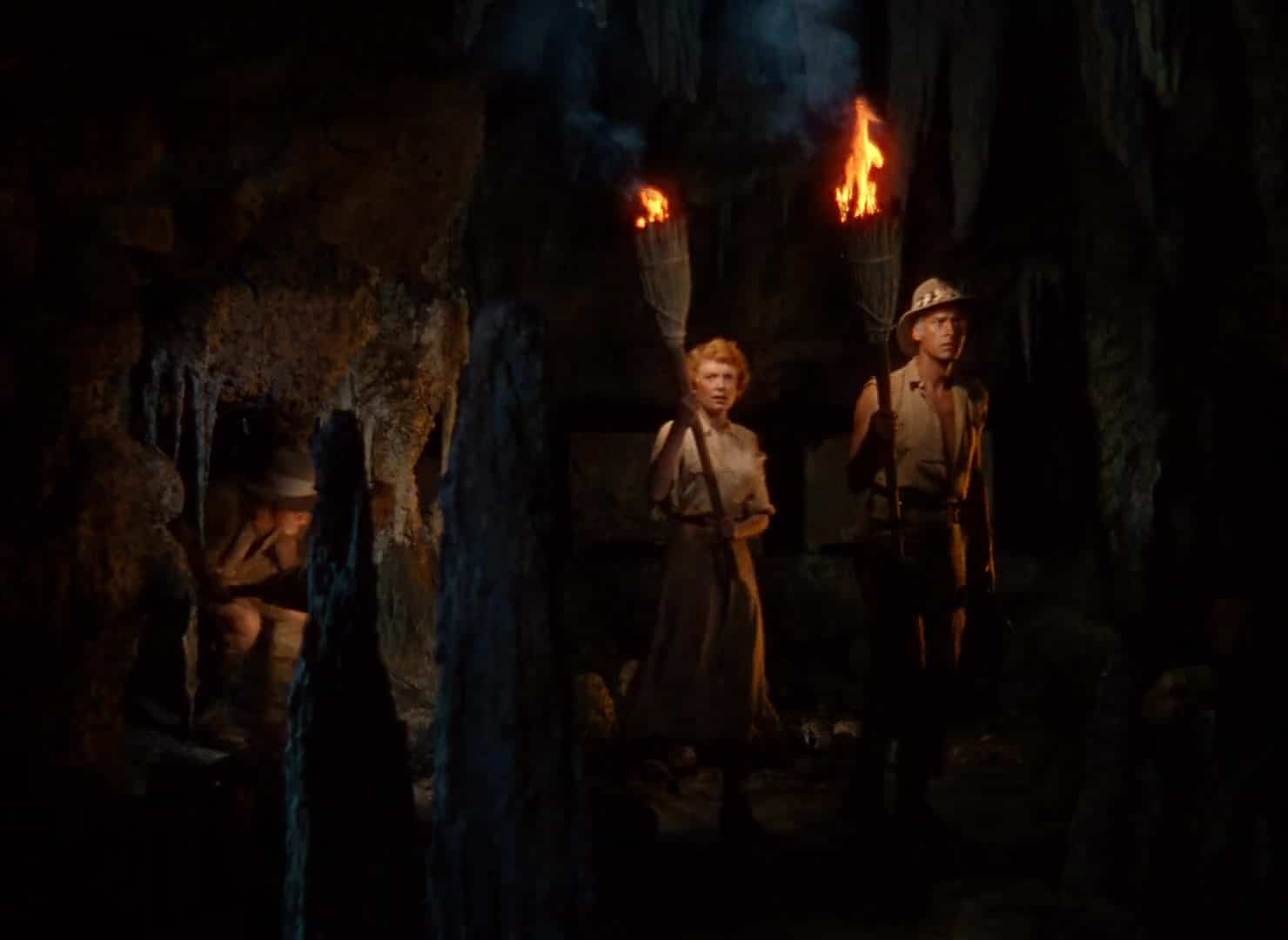
I would put King Solomon’s Mines in the same category as some of the classic films about Tarzan. It’s kind of the same thing even if Tarzan might not have been searching for long lost mythological places. But on the other hand, there’s a lot of mystery in the old Tarzan films as well.
King Solomon’s Mines, according to me, hasn’t aged particularly well and you can see that partly from how stereotypical the story is told but also on how some sequences are shot. It seems to be more interesting to show wild animals during a stampede than to tell the actual story sometimes. It’s predictable but still fascinating.