I’m almost certain I’ve seen Gröna Hissen before. At least parts of it. What’s absolutely beyond doubt is that I already knew the story in advance and had quite recently seen Eva Rydberg’s version on stage. That must have been a recording from Fredriksdalsteatern, of course. And since I am who I am, and my wife is a fan of Sickan Carlsson, I naturally wanted to compare the two, and my wife was also curious to hear what I thought of this version. Of course Gröna Hissen is a reference to the cocktail with the same name.
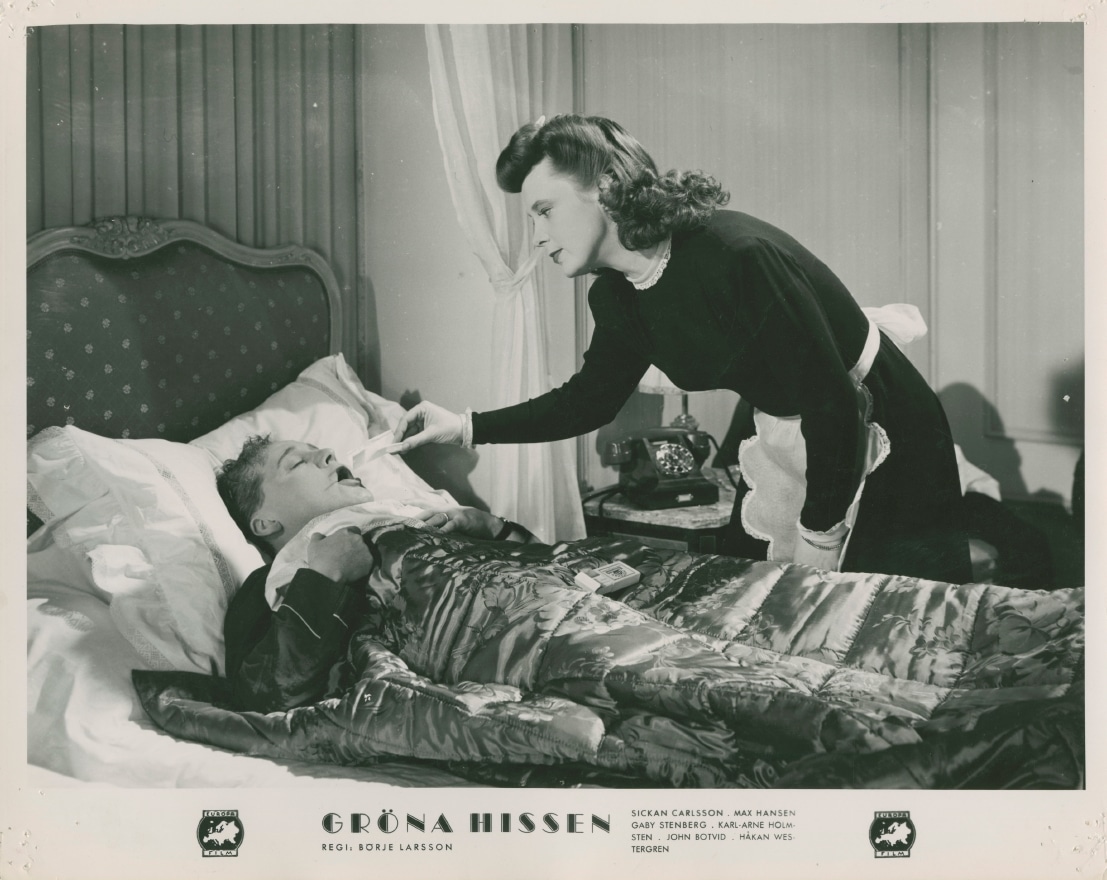
I already knew that Sickan Carlsson played one of the main roles in Gröna Hissen, but it was also interesting to see names like Karl-Arne Holmsten and John Botvid in the cast. I chuckled to myself. This was going to be fun! I also noticed that Kar de Mumma had been involved in writing the dialogue, so I was expecting some fairly amusing lines.
Gröna Hissen
For those unfamiliar with the plot of Gröna Hissen, it basically revolves around Ulla (Gaby Stenberg), Billy’s wife, being approached in town by an old admirer who invites her to the opera. She accepts, since she’s grown tired of her husband. According to her, he’s extraordinarily dull and predictable. Meanwhile, Billy (Max Hansen) and Ulla have invited the Frisk couple over for dinner that very evening. But Peter (Karl-Arne Holmsten) has made other plans, so Lillan (Sickan Carlsson) and Billy are left alone together.
Peter is very different from Billy. He’s out on the town, leaving his wife at home to wonder what he’s up to. He claims he’s attending a meeting, but that’s clearly not true. Together, Billy and Lillan come up with the idea to make their spouses jealous by putting themselves in compromising situations with each other.
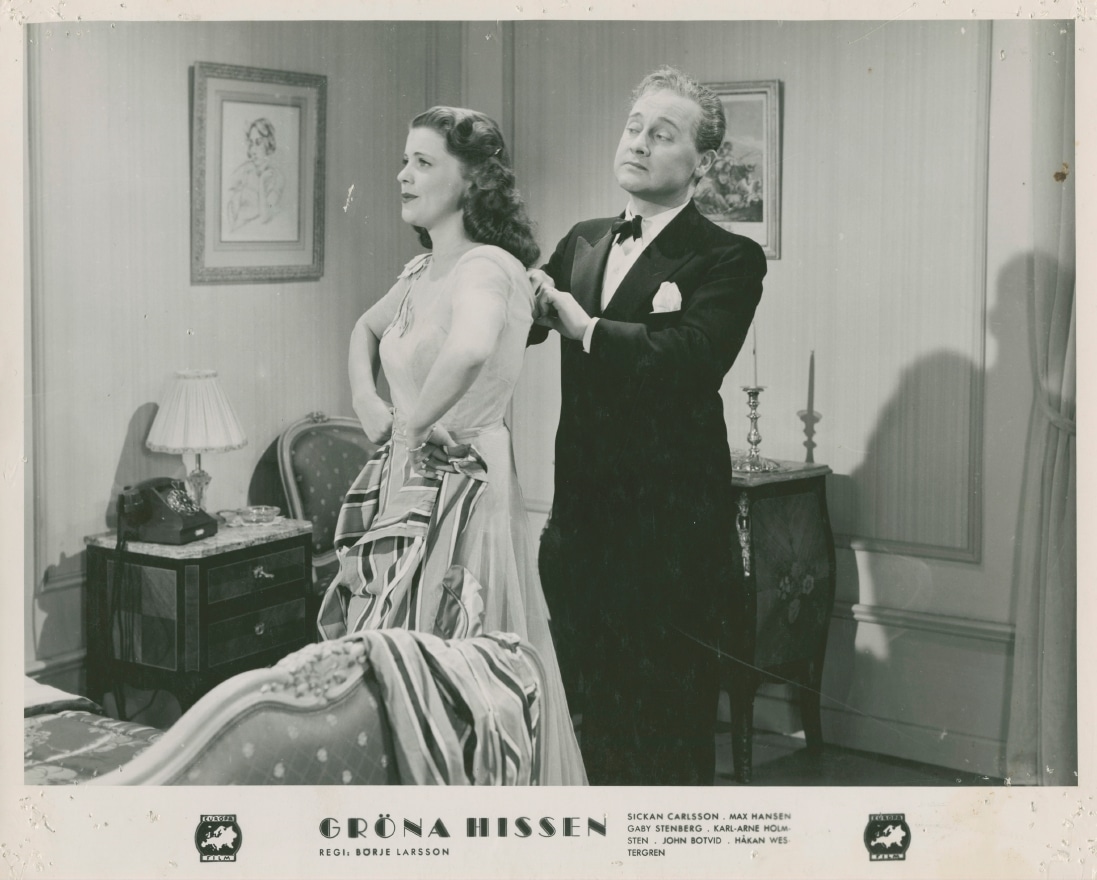
Neither of them is particularly well-versed in nightlife or the art of deceiving a spouse. Watching their clumsy attempts is quite entertaining. They go to a restaurant together, hoping to be seen by acquaintances who might gossip. They check into a hotel to get the rumor mill going and, frankly, try every trick in the book. But none of it is especially effective. Eventually, they give up and return home—or rather, to Max’s apartment. What now? Well… soon they come up with a plan.
Out comes the booze, but since neither of them is familiar with the world of alcohol consumption, they simply have to improvise. I don’t know what it is, but watching drunk people is hilariously funny. The ideas they come up with, and the way they try to slur their way through clever remarks. Anyone who’s been tipsy knows that your arguments seem absolutely brilliant when you’re in the middle of it all.
Max and Lillan have no clue how to mix a cocktail, but since they’ve heard whisky is a good base, they start from there. One type after another is poured in, and in the end, I’d say it becomes a real witch’s brew.
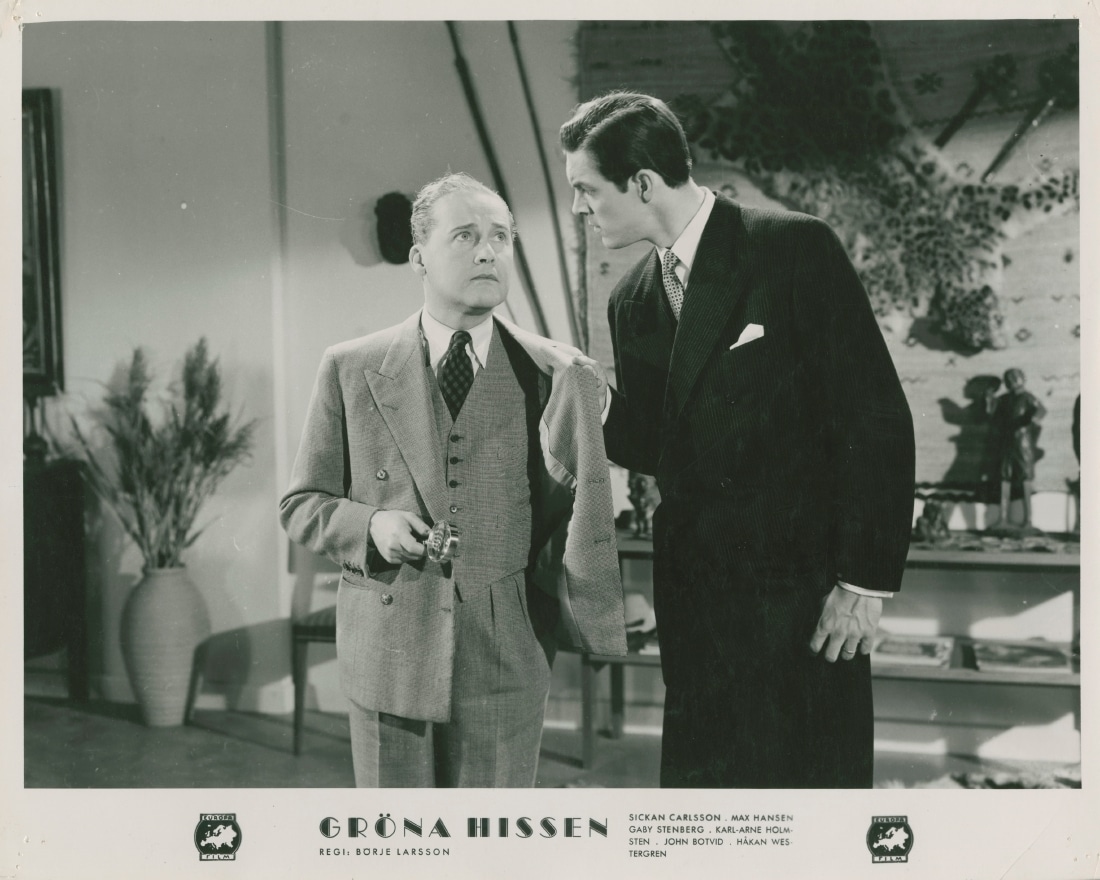
What follows is basically an epic drinking session. Max and Lillan drink, play, and wait for their respective spouses to come home and catch them in a compromising situation. Every time they hear the elevator rattle, they get ready. But it takes a while, and with more and more alcohol, the games get wilder and wilder. They get increasingly loud, prompting the building superintendent (John Botvid) to complain. He’s a proper henpecked husband, dominated by his overbearing wife (Julia Cæsar)—at least until he gets “medicine” for his chest pains from the wild party couple. He develops a taste for it and soon becomes the one wearing the pants in his relationship.
Another time
I have no real grasp of what was considered risqué in film at the time. But I imagine this must have been fairly bold back then. Not only the depiction of drinking, but also a scene where Gaby Stenberg appears topless—well, except for her bra, of course. There’s also the clear highlighting of double standards. Gender roles, if you will. Peter going to “meetings” is apparently just fine in his eyes, but his wife spending the night with Billy makes him furious and ready for divorce. The same goes for Billy’s wife—going to the opera followed by supper with an admirer seems perfectly acceptable. But when Billy lets loose for a night with Lillan, she’s livid. Even though she herself asked him not to be so boring and hopelessly nice all the time.
The actual moral of Gröna Hissen, which comes the day after their wild drunken night, isn’t nearly as fun to watch as the drunkenness itself. Nor is it very surprising. Drunk people are funny. It should be noted, though, that you’re never fully fooled by the acting. You never get the sense that it’s truly authentic. If the film were made today, it would probably come across much more convincingly. But then again, acting was simply different back in the day. People spoke differently, and things were portrayed differently. Whether it’s believable by today’s standards isn’t really the point.
About the Author