
 Tommy Snöberg Söderberg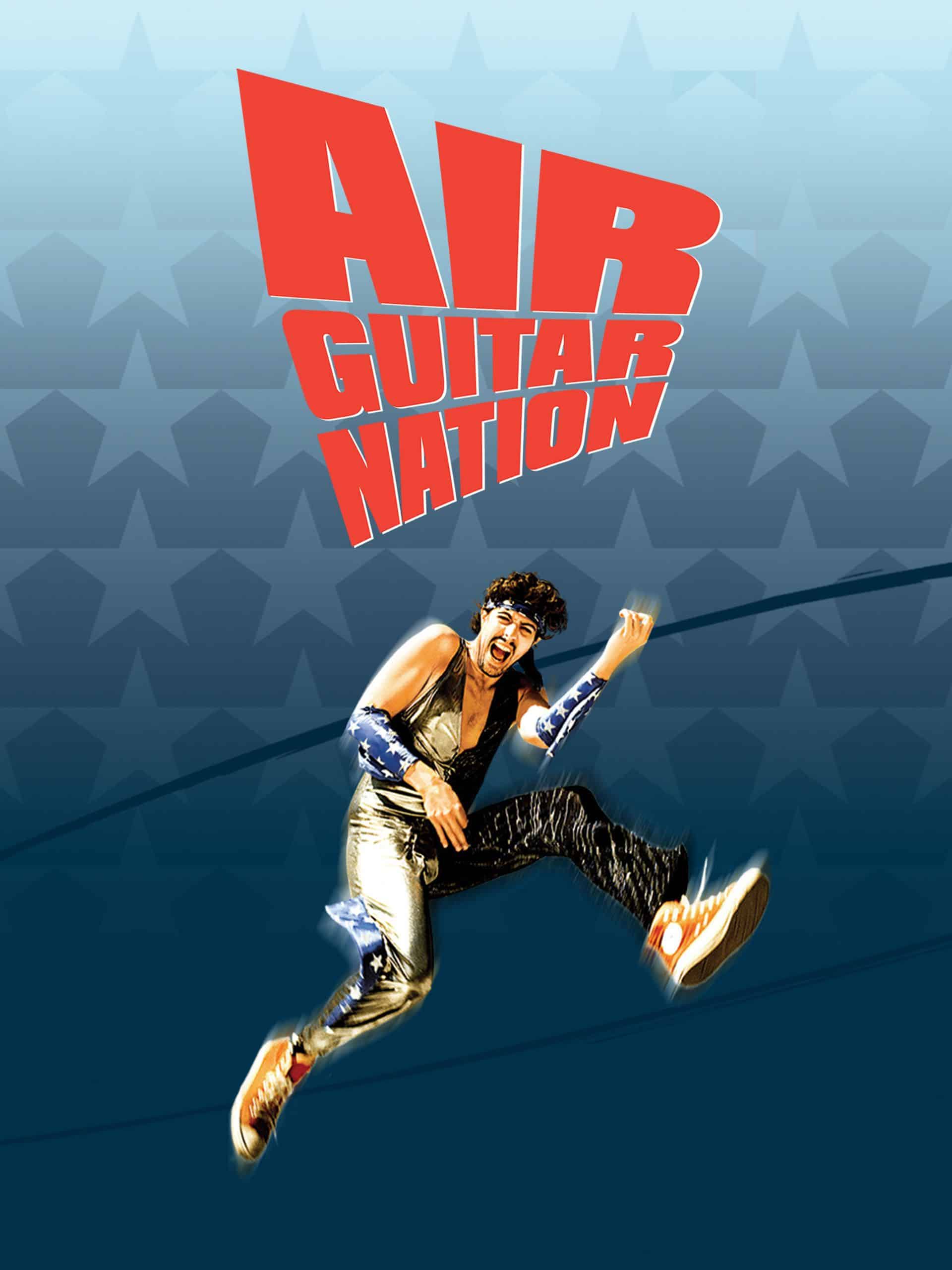
It is time for the annual World Air Guitar Championships, as usual held in Oulu, Finland. From there, we rewind the tape and follow the qualifiers in the first American championship. The two contenders: David “C-Diddy” Jung, who seems to crush all opposition in his path, and the tireless Dan “Björn Türoque” Crane. What unfolds is a battle, not only on stage but also in the media, where the “new” sport receives considerable attention. The winner earns a trip to the world championship, where a chance to be crowned world champion in this peculiar discipline awaits.
It is, admittedly, difficult to describe a documentary in just a few words. I believe I have at least captured the essence above, and although the film presents both the humor and the seriousness of the phenomenon, I firmly believe it should be taken with the utmost seriousness. What may seem trivial to one person can undoubtedly be matters of vital importance to another. And who could write a review about air guitars without mentioning our own Swedish figure in the field: Micke “The Dude” Dubois, who admittedly played air bass and later became better known as Svullo.
But that was in the early days of air guitar, around 1984, while the film is set in 2003. Despite this, it was still a relatively new phenomenon at the time, at least in the United States, and we follow two contenders, becoming acquainted with both their stage personas—C-Diddy and Björn Türoque—and their real identities, David Jung and Dan Crane. Interviews are interwoven with live footage from performances. There is also reflection on whether this is truly an art form or merely an amusing gimmick. Some argue that it is unquestionably performance art, while others simply see it as a fun pastime. The organizers of the world championships, who naturally also appear in this documentary, seem to have shifted their perspective as the competition has grown larger. The bigger the turnout, the greater the sense of seriousness.
Not that it truly matters, since this is, after all, a documentary, but predicting how it will end is hardly difficult. There is certainly a fair amount of speculation regarding different techniques among the participants, but the outcome still feels, in some sense, entirely obvious. It is also with a certain sense of nostalgia that one watches the film—what hard-rocking youth has not once stood in their room, raising a hand and playing along? Back then, there was no real guitar, but it was fun, and one truly immersed oneself in the music. Perhaps that is also where the foundations of later musical projects were laid, and I would certainly argue that it is an excellent way to learn music—you simply have no choice but to place all the rhythms correctly if you want the flow to work. One might even consider taking it up again in older age…
Interesting and instructive!
About the Author


