Tommy Snöberg Söderberg
71 Fragments of a Chronology of Chance is a very impressive film. It’s written and directed by Michael Haneke, who has given us many great and thought-provoking epics through the years. 71 Fragments of a Chronology of Chance is about a number of people’s everyday lives, seemingly unrelated to one another, that are portrayed in an intimate manner. Gradually, we get to know the different characters and begin to understand more and more what they actually have in common. The fragmented events depicted in the film ultimately lead to a shared ending, with tragedy as the main common denominator. An ending we already know from the start, but perhaps don’t think about until it’s too late.
The opening text suggests that 71 Fragments of a Chronology of Chance might be based on some real events, but if I know Haneke right, that’s by no means a guarantee that this is the case. However, it may make the rest of the film feel more intense than would otherwise be the case, which, if that’s the result, justifies the approach quite well. If there’s only one thought behind the film, and if that thought bears fruit, I would definitely call it a successful move!
If we compare 71 Fragments of a Chronology of Chance to the previous parts of Haneke’s trilogy about alienation, he has here expanded the issue from family relationships to society as a whole, in a much broader perspective. It’s a natural development that I really like, an evolution from the ground up where everything is finally taken to the extreme.
That the film is fragmented probably won’t come as a surprise given the title, but I would definitely argue that it takes the word “fragmentation” to a whole new level. There’s no steady flow of events as you might expect in films like Robert Altman’s Shortcuts or Paul Haggis’ Crash, which are perhaps the best examples of this type of storytelling. To mention Pulp Fiction and similar films isn’t quite fair, since this film still sticks to the timeline and tells the story chronologically. However, there’s no steady flow; events are instead abruptly cut off, almost before they’re completed, which at first is somewhat irritating. You quickly get used to it, though, and after about half an hour, you understand the point of it.
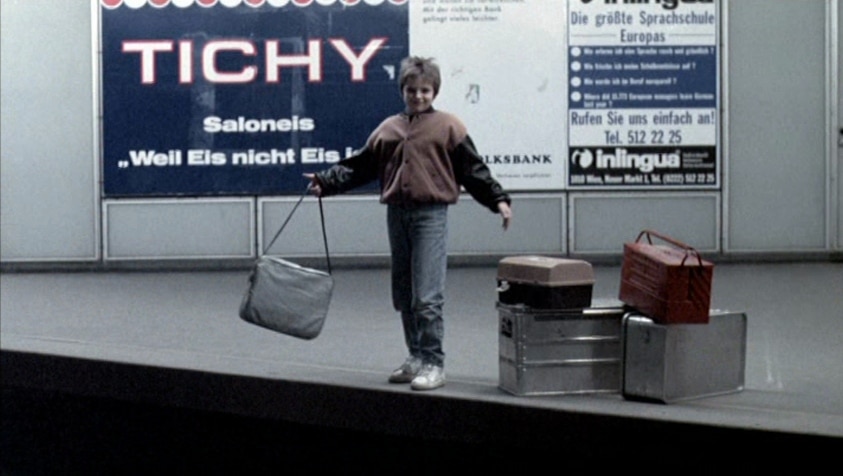
The environments are perfect as representations of a dull, gray everyday life; nothing shines through, and while I wouldn’t call it realism, it is certainly a gritty reality and not a sanitized one. Everything radiates boredom, and this is, of course, an important point in the film. I wouldn’t go as far as to call the social depiction dystopian or dysfunctional, but it is undeniably a very negative portrayal, with a great deal of loneliness in various forms. It’s a cold and ruthless world in many ways, and one of the first truly moving scenes in the film is when a homeless boy steals a series of comic books—Donald Duck—and you’re struck by how much a trivial item like a comic book can mean to someone who has nothing!
You don’t get a moment to catch your breath, and there’s no redeeming comedy to lighten the mood anywhere. The intensity in the imagery seems to be achieved through long takes with a static camera, or by Haneke’s persistence in not showing people’s faces in situations where a conventional filmmaker would do so. He portrays events, not individuals. Of course, it’s also about people, but not quite in the way you might expect, and it’s clear that the characters are gross generalizations, and the film is about society as a whole, rather than its components—the people!
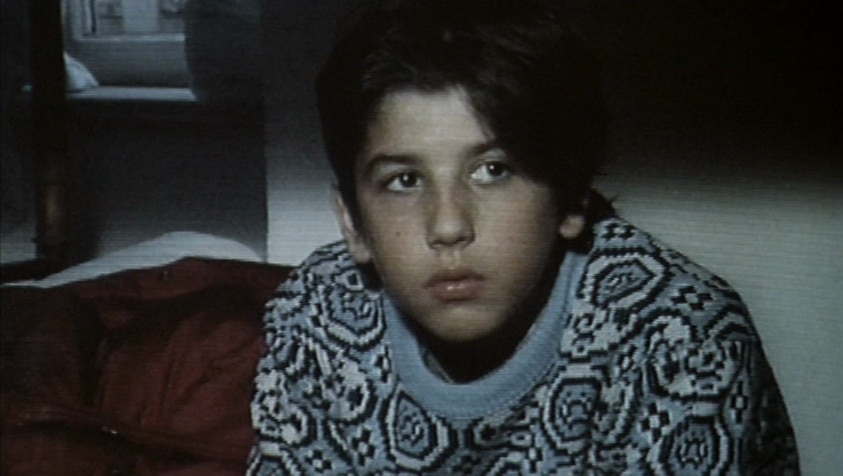
At the same time, we’re also shown news broadcasts throughout 71 Fragments of a Chronology of Chance that shed light on the more global situation outside the smaller world of our protagonists. It’s portrayed in a very cold way, but you can definitely recognize the news dramaturgy from actual broadcasts. You’re comfortable behind your own doors, very interested in what’s happening in distant countries, as long as the violence stays away from your own neighborhood. One of the news segments feels a bit in poor taste in retrospect, as it deals with Michael Jackson and the pedophilia allegations that were circulating at the time of the film. Of course, this has nothing to do with the film itself, but I do find it somewhat heavy to watch this segment just weeks after Michael Jackson passed away. This is certainly more interesting from a psychological perspective unrelated to the film, but it does highlight how our perception of events changes with the experiences we have. Haneke couldn’t have foreseen these events outside the film’s world, but I still felt it was worth mentioning in passing.
This is also a film of subtle nuances. For example, there’s a really long scene with a static camera where an elderly man speaks to his daughter on the phone. The dialogue is absolutely brilliant, and it’s the tiny changes in the acting that make an enormous difference. Loneliness, bitterness, and the feeling of “there’s no substitute for experience” are some of the emotions you get from the conversation. In other scenes, it’s tiny gestures that speak louder than a thousand words. But it’s far from always that a fragment actually has its own significance. There’s no moral or point to a fragment taken out of context, in my opinion. It’s only when you have the whole picture that you can piece together the puzzle that 71 Fragments of a Chronology of Chance represents.
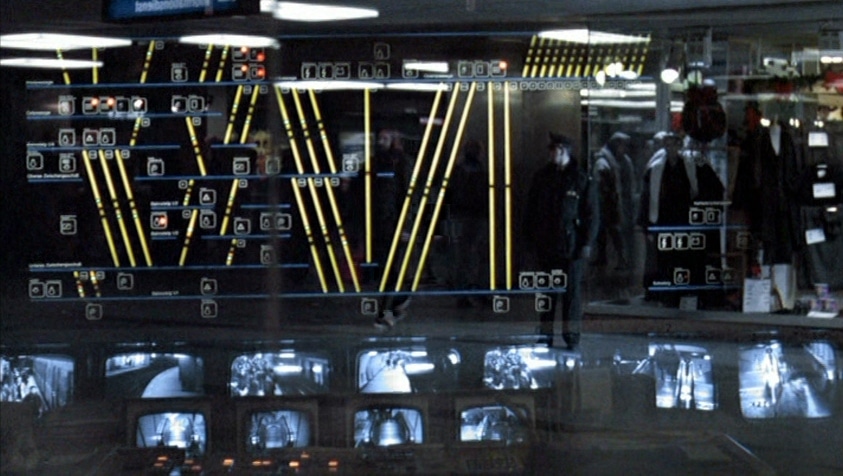
Without really knowing why, which annoys me somewhat, I have to admit that this is actually quite an exciting film. And even though it’s fragmented, there’s always curiosity about what will happen next. If there’s any political message in the film, it would probably be that money is the root of all evil, or at least a necessary evil in society. Everything that happens in the end is driven by this common denominator, and what we already knew would happen from the beginning wouldn’t have occurred without this ingredient.
It would be quite interesting to count and verify if there are indeed 71 fragments in the film, but that’s on a level of nerdiness that’s well above my own at the moment. In any case, 71 Fragments of a Chronology of Chance is a fantastically good film that outshines the first two parts of the trilogy (The Seventh Continent, Benny’s Video) by a mile. There are tiny, subtle events that slowly build up and finally make the cup overflow, and that’s perhaps something very relevant today. Maybe even more now than when the film was made. I think about various acts of madness, school massacres, etc.
About the Author