
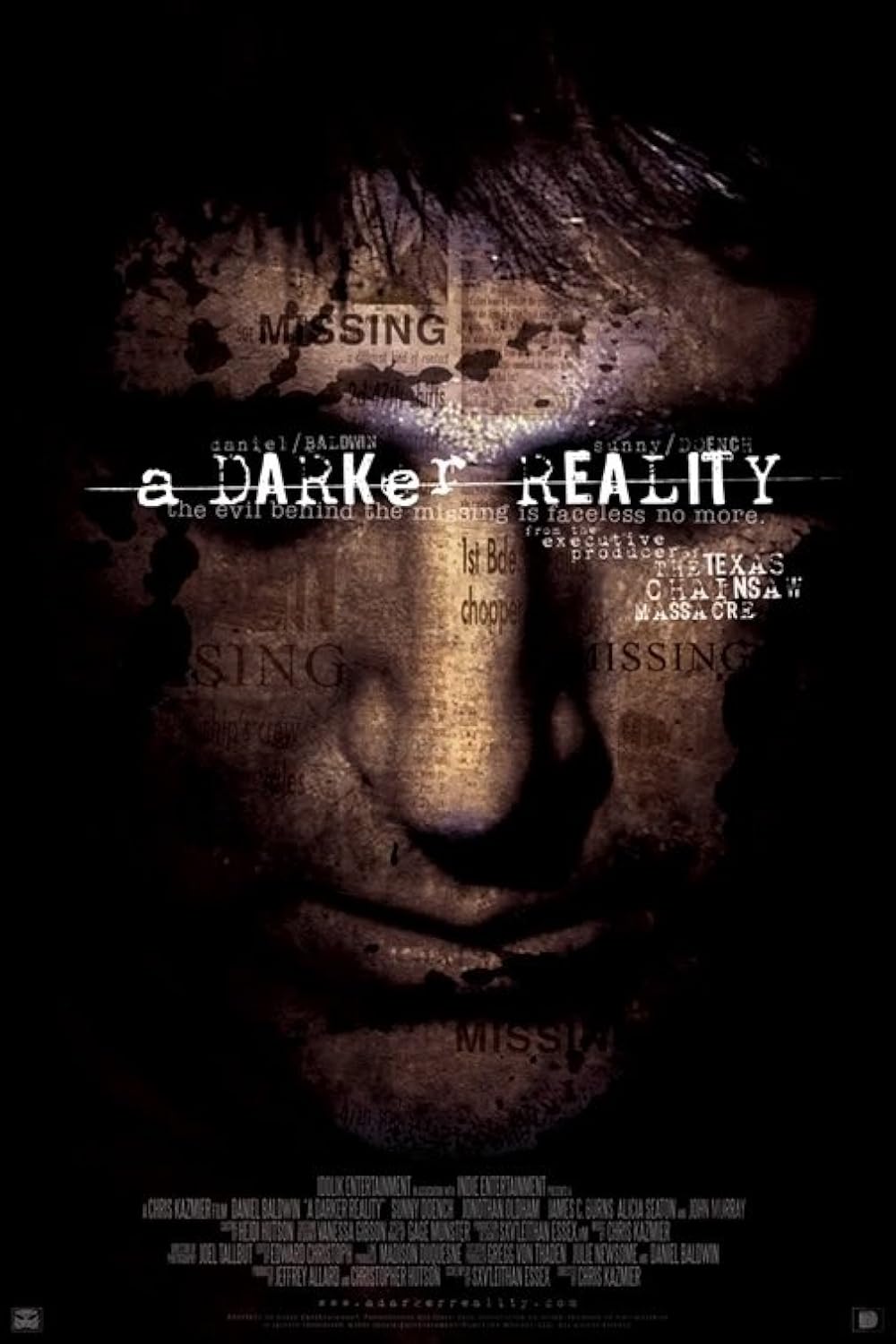
I couldn’t quite figure out why the villain — the serial killer, the sadist — in this film looked so familiar. It wasn’t until just now that it struck me: he’s one of the Baldwin brothers. More specifically, Daniel Baldwin, whom I admittedly don’t know particularly well. Then again, they all resemble one another to some degree, so the features are hard to miss.
I’m not sure I want to rank his acting abilities against those of his brothers, but I can say that I had no issue with his performance here. He plays the role of “The Ghost,” as the serial killer is known. He is infamous for abducting young women and torturing them in his basement until they no longer live. Some, naturally, survive longer than others — and now one of them has even managed to escape and is assisting the police in tracking him down.
Of course, it is not as simple as pressing a button to erase the experiences from that basement, yet she appears to cope relatively well. At one point, I believe it is mentioned that she was held captive for three years, which would suggest that she ought to be hysterical at the slightest reminder of her imprisonment. Yet, as noted, she handles herself surprisingly well. She has kept meticulous track of time and can account for exactly how many days each of the others was held alongside her before they died. It inevitably invites speculation about Stockholm syndrome and similar psychological mechanisms.
It was not an outstanding film in every respect, but I would say it remained solidly acceptable throughout. Nothing that distinguished it negatively — nor particularly positively, either. The torture scenes (which are shown) are fairly brutal, and it feels as though a deliberate effort was made to conceive the most disturbing methods possible for the killer to employ. In a film that purports to depict events of this nature, I view that as a strength. There can be no half-measures if the intended effect — presumably to unsettle the audience — is to be achieved.
Naturally, there will be gorehounds who respond in precisely the opposite way, but in my view, that misses the point entirely. At that stage, one is watching solely for the splatter rather than for the underlying narrative.


