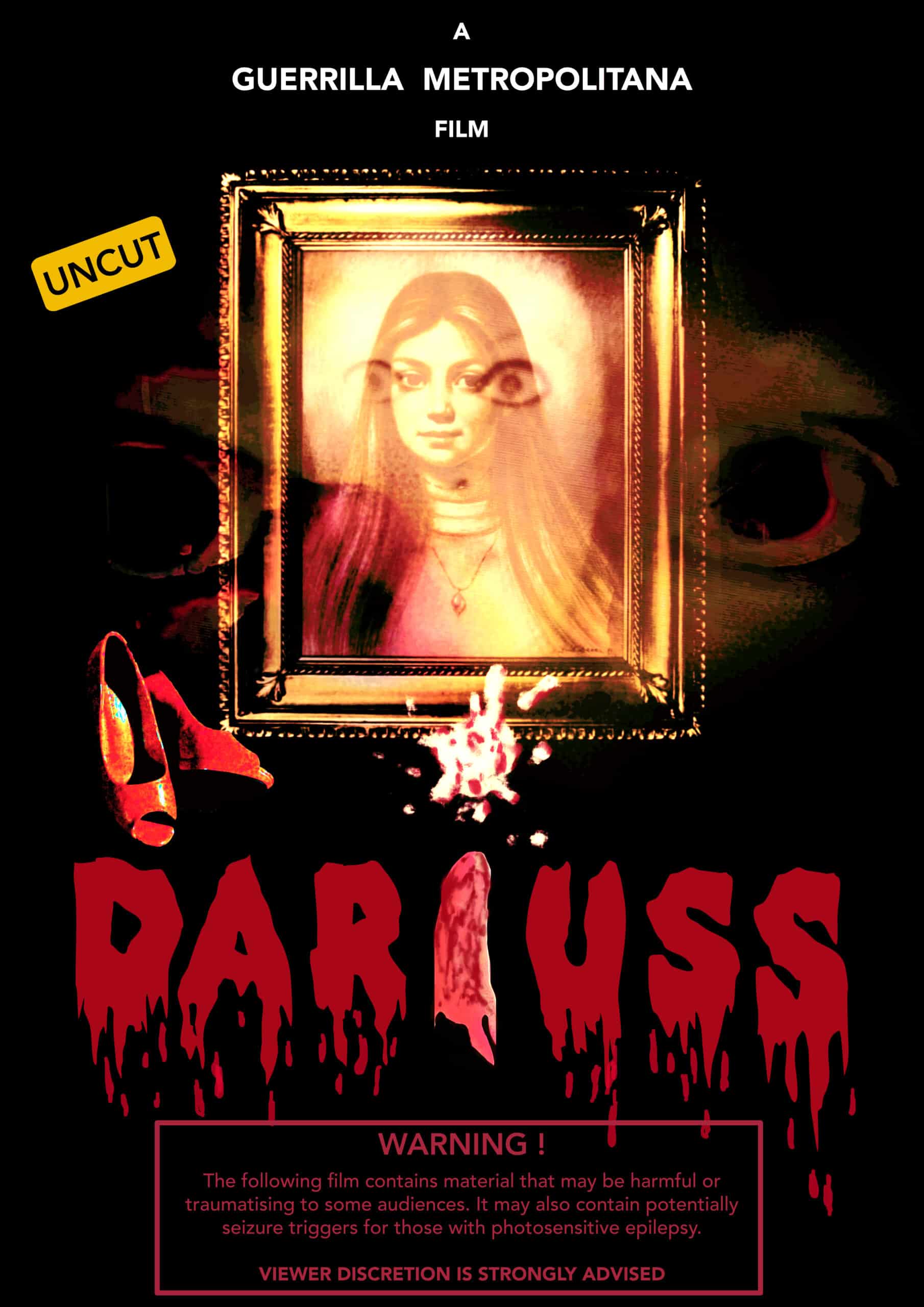
Dariuss is Guerrilla Metropolitana’s first feature film. Well, it’s actually kind of balancing on the edge between a short film and a feature since it’s just over an hour. I’m not sure if there’s an official time stamp for it, but I’ve always heard that to be taken as a feature film, you need at least 70 minutes. Nevermind, most flicks these days are too long for their own good anyway. It’s better to tell the story and get it over with than to include endless scenes that don’t really contribute to anything.
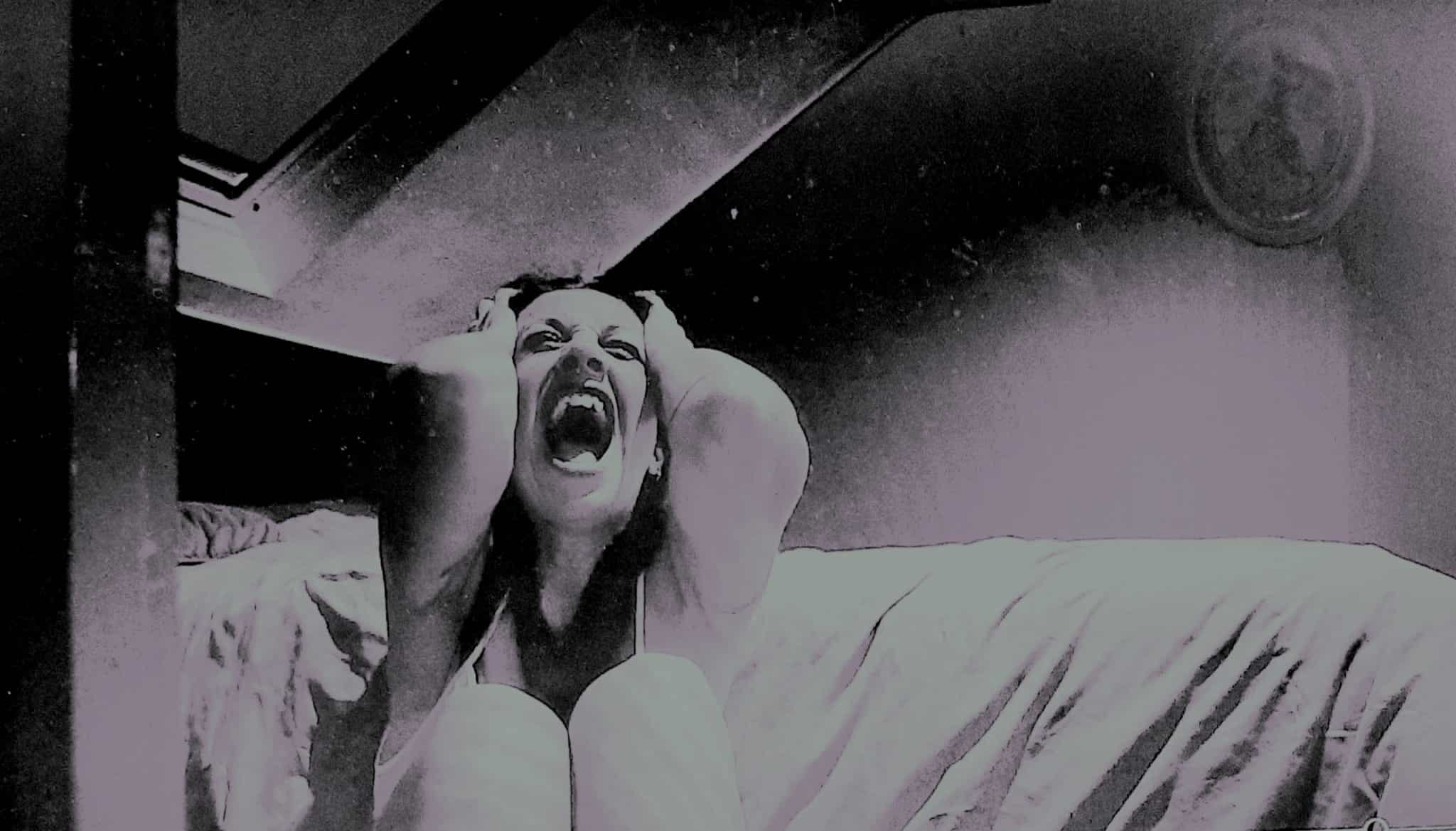
Apart from the title art, it starts off pretty quiet, soothing even. Imagery with pale colors is shown: ducks swimming in a lake, a girl running around, that kind of thing. Nice music is enhancing the imagery. But all of a sudden it’s not so nice anymore. It’s starting to get unsettling. It becomes darker and a bit perverted, maybe. It’s just innuendos and suggestions, but you can tell something is about to happen. Furthermore, it’s very fragmented. There are stills inserted among the short sequences of moving images.
It’s obvious that this is not a regular movie. If you’re looking for a regular horror movie, look elsewhere because this is something else. There are winks at the silent era in more ways than one. Sometimes it’s like a found footage flick, sometimes art-house, and sometimes like a silent film, complete with tint and iris diaphragm. It’s apparently about the loss of a child, although that is not very obvious. The Loss of a child and how different people deal with that loss.
A dropping sound in certain parts of the film reminds me of how effective that can be. I think about The segment The Drop of Water in Mario Bava’s Black Sabbath. Guerrilla Metropolitana doesn’t quite reach the same effect, though. But on the other hand, very few, if anyone, would. But there is some tension associated with the sound, that’s for sure.
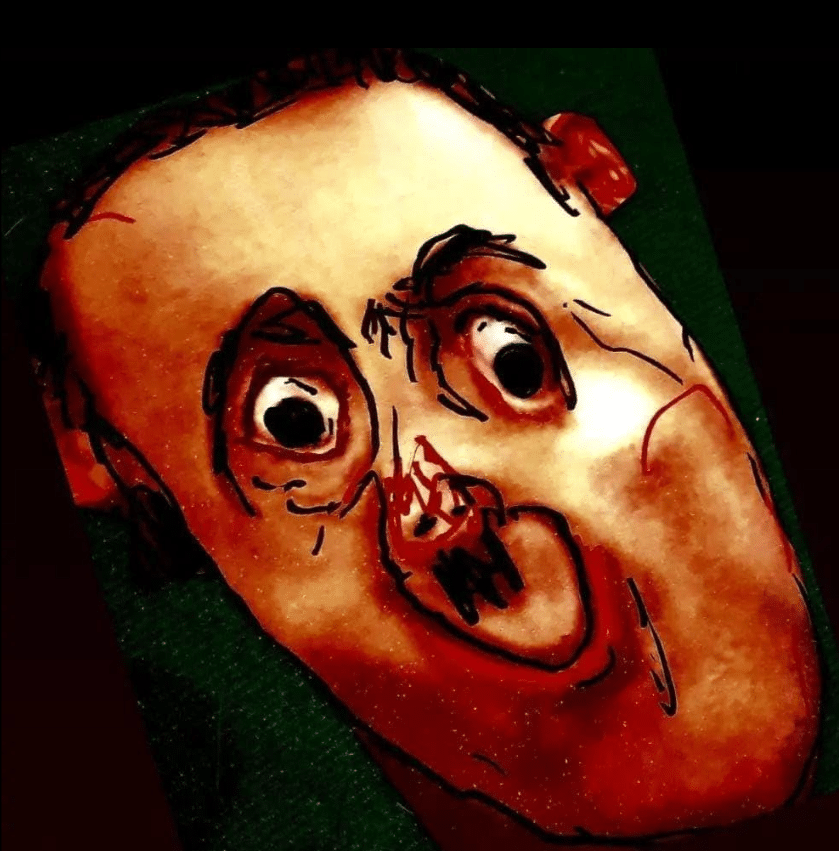
The camera makes sure we see certain details, and we’re not allowed to misinterpret it as we are immediately given a flashback so that we don’t miss the connection. It’s something I usually don’t like. I think it’s to underestimate the audience. Even here, where everything is so strange and awkward, it’s not necessary for us to understand. On the other hand, I am not convinced that it’s the true purpose of showing it that way. I rather think that it’s an artistic point. And the further Dariuss progresses, the more sense it makes. Maybe we needed that help deducing the symbolism after all?
I would have liked Dariuss to be a little more coherent. Not the imagery per se, but I feel like there is a sequence and then a pause before the next sequence. It could have been connected via sound, at least for a little more flow. But I don’t think that Guerrilla Metropolitana makes anything by chance. There’s a purpose for everything. But I think that if you take ten people, or even fifty people, you will have a unique interpretation of the imagery from each and every one. What symbolizes what, and what is connected how? And that’s a strength of Dariuss as a film and art piece. I also think you would have a unanimous opinion that Dariuss is disturbing as hell!
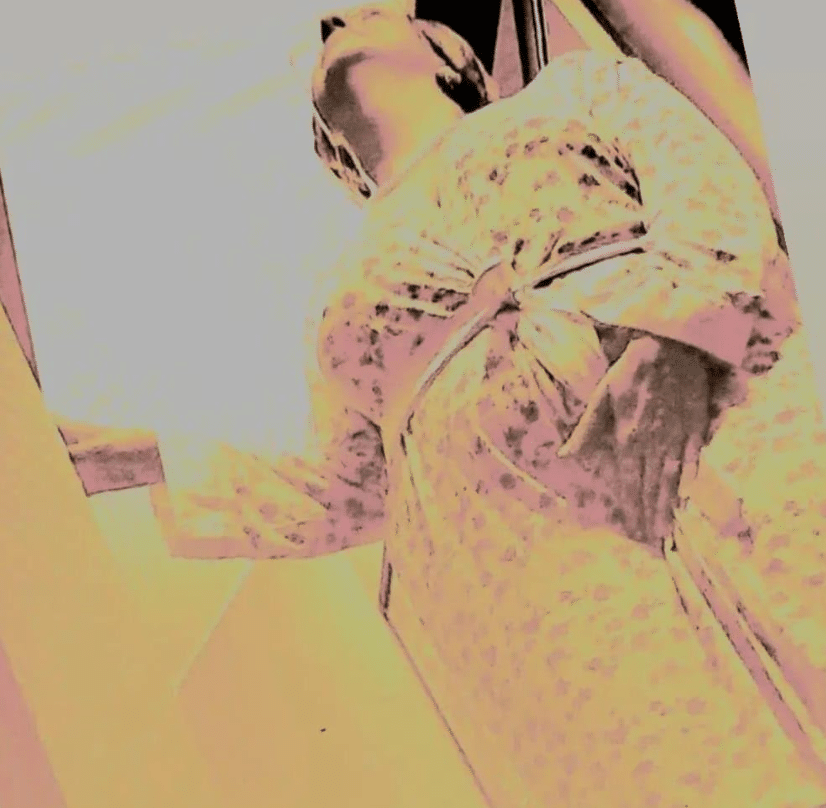
And it becomes more disturbing as it goes along. As more and more sexual innuendos appear. It’s absolutely not shown in graphic detail; it’s very subtle. But inside the audience’s mind, the images and thoughts emerge. But it’s not only the imagery; it’s also the sounds. It can be a completely black picture, but the sounds still make it uncomfortable.
At the end I still have unanswered questions. Who the hell is Dariuss? Are those red shoes a reference to The Wizard of Oz? Is this what insanity looks like? Was I disturbed? Hell yes! Would I see it again? Probably not.
About the Author