Tommy Snöberg Söderberg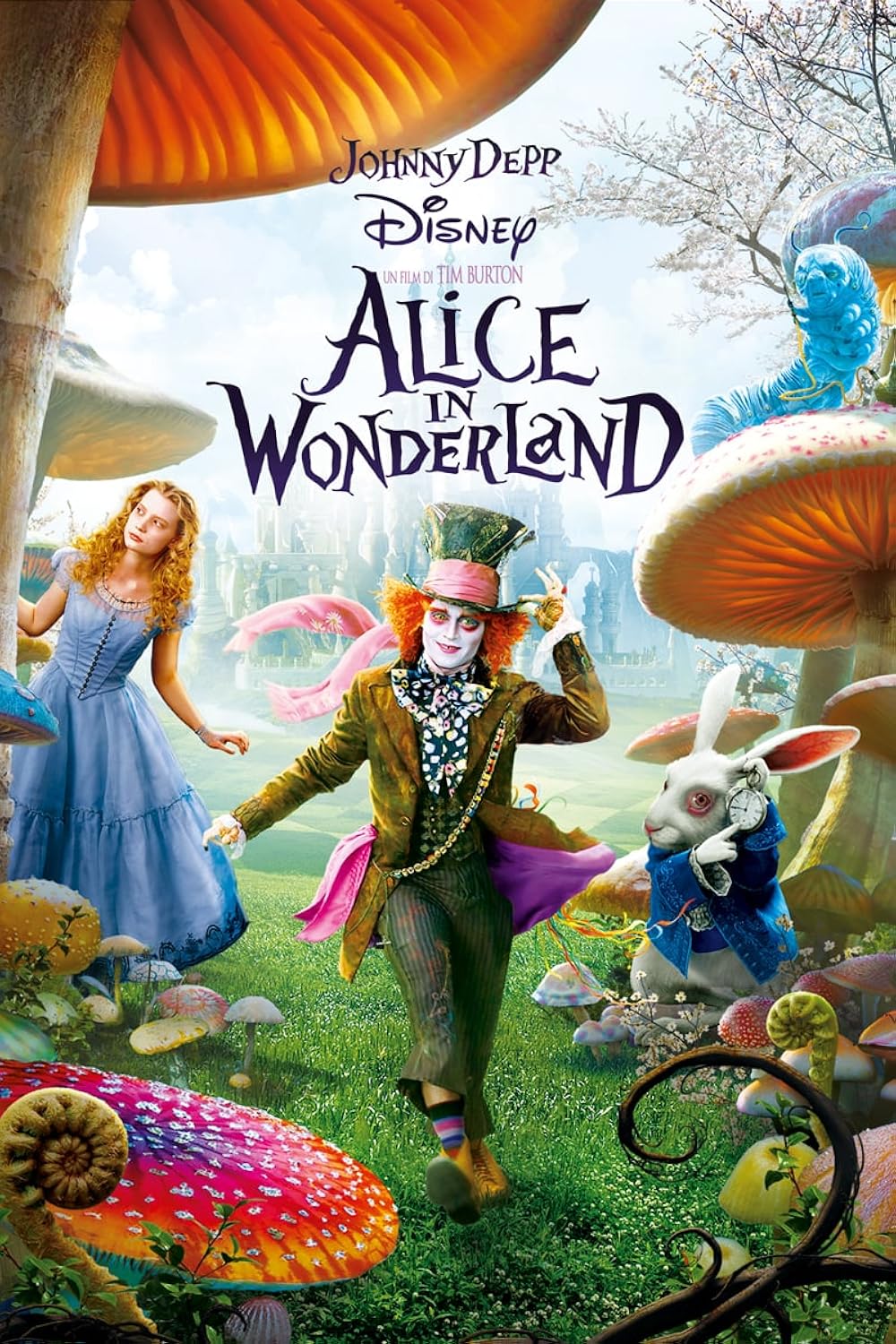
When Alice was a child, she visited a mysterious land filled with creatures that, under any reasonable circumstances, should be impossible. A Mad Hatter, a cat that vanishes at will, a Red Queen with a disproportionately large head, and a rabbit dressed in clothing. The animals could, against all logic, speak, and the adventure was unimaginably imaginative. But that was a long time ago, and now, as Alice is about to get married—or at least is being proposed to—she sees a rabbit she feels compelled to follow. When it disappears into a hole in a tree, Alice follows and falls, and falls, and falls into Wonderland, a place she has no memory of. A prophecy, however, states that the only one who can defeat the Jabberwocky is Alice herself. Good faces evil, and in between lies madness and the improbable figures she cannot recall. The adventure can begin.
Of course, this is not the first time a film adaptation of Lewis Carroll’s stories about Alice has been made. One does not have to look very far to find versions from virtually every decade of the twentieth century, including adult interpretations, television productions, and adaptations from all corners of the world. One can reasonably conclude that the core story of Alice is highly popular. Personally, I find it interesting, though I have never examined it in such depth that I am familiar with all its details. I cannot therefore judge how many liberties Tim Burton has taken, but I do not care. A film that requires prior knowledge—meaning you must have read the book first—feels, at least in part, like a failure.
But prior knowledge is not required here, and the film is certainly not a failure. I have seen it criticized in some places, but I truly do not understand why. Admittedly, Burton has a very distinctive style, and this film fully embraces it. The backgrounds and environments are absolutely magnificent, whether created digitally or not. The characters are equally distinctive. How much is Burton’s vision and how much is shaped by the actors is hard to determine, but with actors of Johnny Depp’s caliber, one knows he commits fully to the role—and he delivers a fantastic performance as the Mad Hatter. One can only wonder how long the makeup process took before each take. As the saying goes, beauty demands suffering.
Alice—played by Mia Wasikowska—is naturally more grounded in her appearance, which fits the character. She comes from the real world, and one cannot take excessive visual liberties with her. That does not mean she delivers a poor performance—quite the opposite. She captures the innocence, the sense of adventure, the curiosity, and the rebellious spirit that emerges at the threshold between childhood and adulthood.
The struggle between good and evil, which the film presents on the surface, takes the form of a power struggle between two sisters: the White Queen, played by Anne Hathaway, representing good, and the Red Queen, played by Helena Bonham Carter, as her malevolent counterpart. They fight according to ancient rules, and although it is essentially a battle of life and death, there are boundaries neither crosses. There is also the ancient prophecy dictating how things are meant to unfold. Beneath this surface, one can, if one chooses, draw parallels to Alice’s situation just before she falls into the hole and enters this fantastical world—her thoughts about whether or not to accept the marriage proposal, and so on. A deeper interpretation is not necessary for the film to function, but it is certainly possible if one wishes.
But perhaps I am overanalyzing the situation. Burton’s strength lies in creating visually striking films, but he often lacks the ability to construct more complex, multi-layered narratives in the way that, for example, many of Terry Gilliam’s films succeed. That is not an unfair comparison. Both filmmakers are devoted to creating extraordinary visual worlds, and it would be fascinating to see them collaborate. Until that happens, I am content with this film, which I consider one of Burton’s finest when it comes to visual perfection.
About the Author