The 36th Chamber of Shaolin – 1978
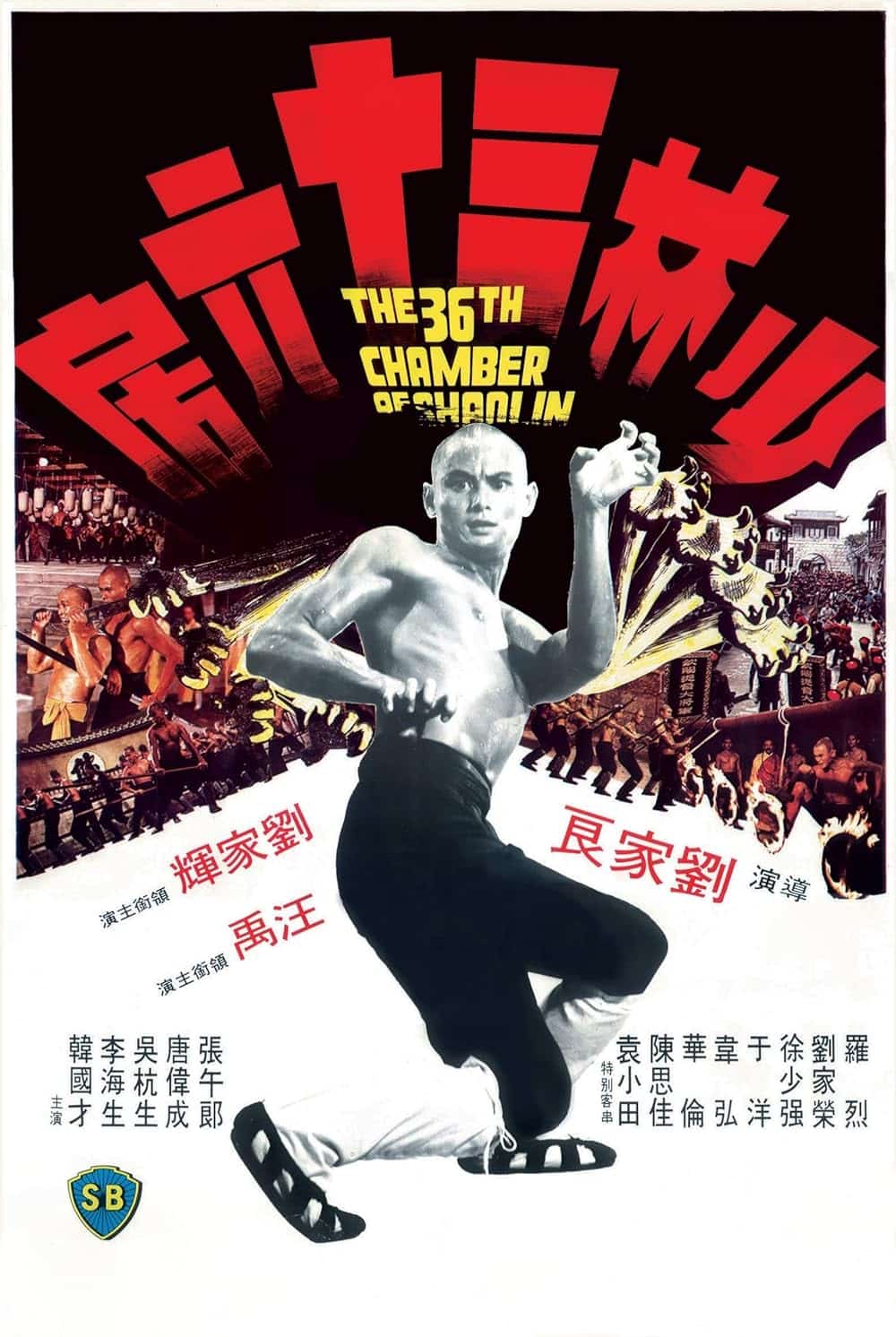
The 36th Chamber of Shaolin takes place in a time of oppression and occupation. The peaceful Liu Yu-Te lives a quiet life, but his studies come to an abrupt end when his entire family is murdered by the oppressors’ soldiers. He narrowly escapes the massacre and hides under a false name in the Shaolin Temple atop the mountain. There, he begins a determined study of martial arts and soon discovers that the temple is a grueling school with unwavering discipline. Resolute in his quest for vengeance, he masters all 35 chambers of the temple in record time. Now, only one task remains: avenging his family and overthrowing the tyrant’s regime. To achieve this, he proposes creating a 36th chamber in the temple…
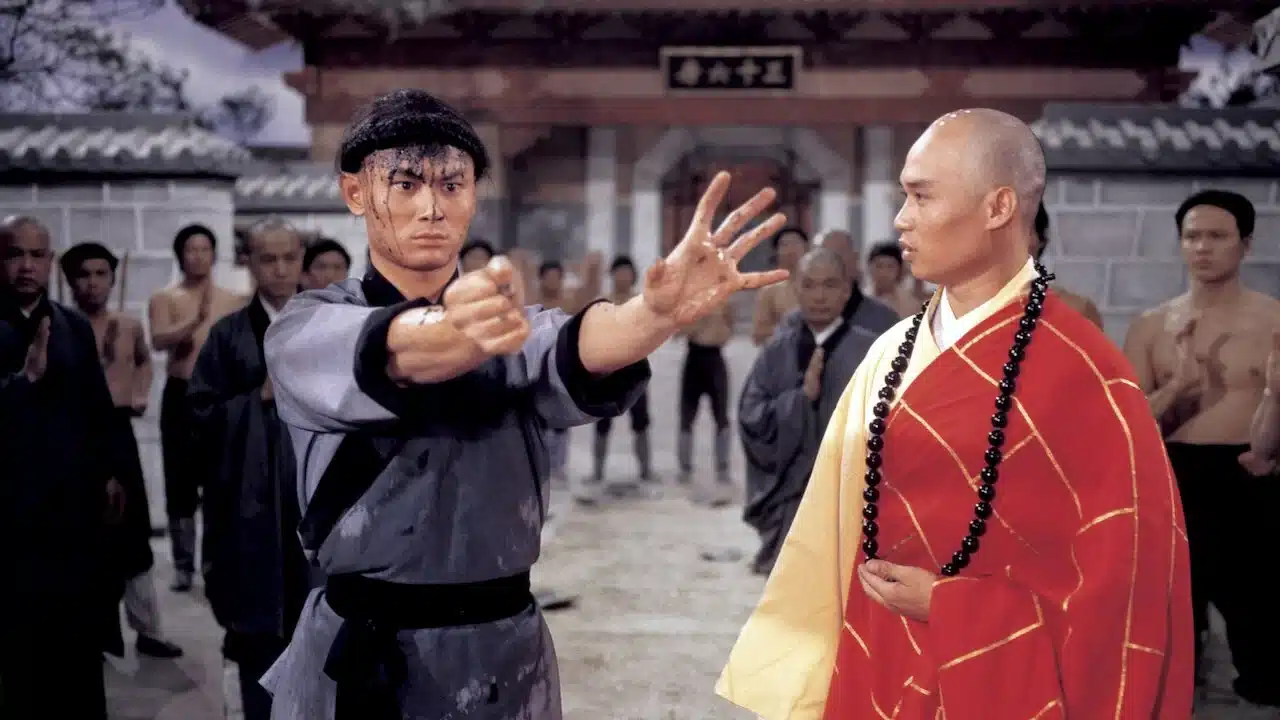
The film opens beautifully and with stylistic purity, starting with a solitary Shaolin monk performing Kung Fu, setting the tone for the entire movie. While I am by no means an expert on Chinese history or martial arts, the film feels fairly realistic to me, and the settings and costumes used throughout come across as highly authentic.
Fight scenes in the 36th Chamber of Shaolin
The fight scenes in the 36th Chamber of Shaolin that follow once the story gets underway are well-choreographed and incredibly entertaining to watch. One almost feels a tinge of disappointment when the first scene ends and the conflicts between the oppressors and the local population are explained. Naturally, this setup is necessary to establish the foundation for the rest of the film’s development.
Initially, the movie feels somewhat two-dimensional and simplistic in its worldview—very much a case of good versus evil, or black versus white if you prefer. However, it’s important to remember that this is a piece of Chinese history, and such a narrative likely resonates more deeply with a population that has a history of cultural or historically imposed submission ingrained in its collective psyche.
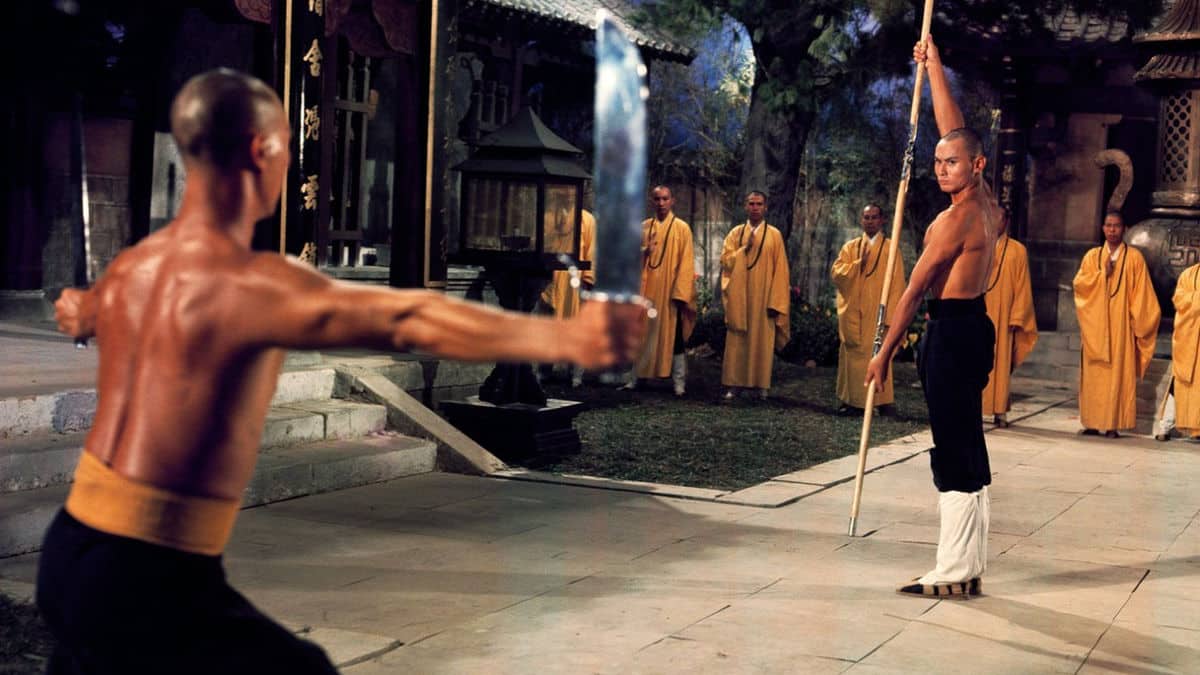
This oversimplification, however, is confined to the early parts of the 36th Chamber of Shaolin, when the groundwork for the story is being laid. Once the focus shifts to the Shaolin Temple, the film takes on a different character, incorporating symbolism and what we often refer to as “Eastern wisdom.” Of course, this is more about Buddhism than geographical directions, but it’s always enjoyable to see how these elements are woven into the narrative, even for dramatic purposes.
Training methods are great
Watching the training methods employed in the temple is highly engaging, and seeing the protagonist’s struggle to improve after initially trying to cheat his way to success is fascinating. There’s also a subtle layer of symbolism here: you can’t cheat your way to success! While we’re on the topic of symbolism, I should also mention the occasional appearance of reversed swastikas. These have no connection to Nazism but are instead a common symbol in Eastern and Buddhist traditions.
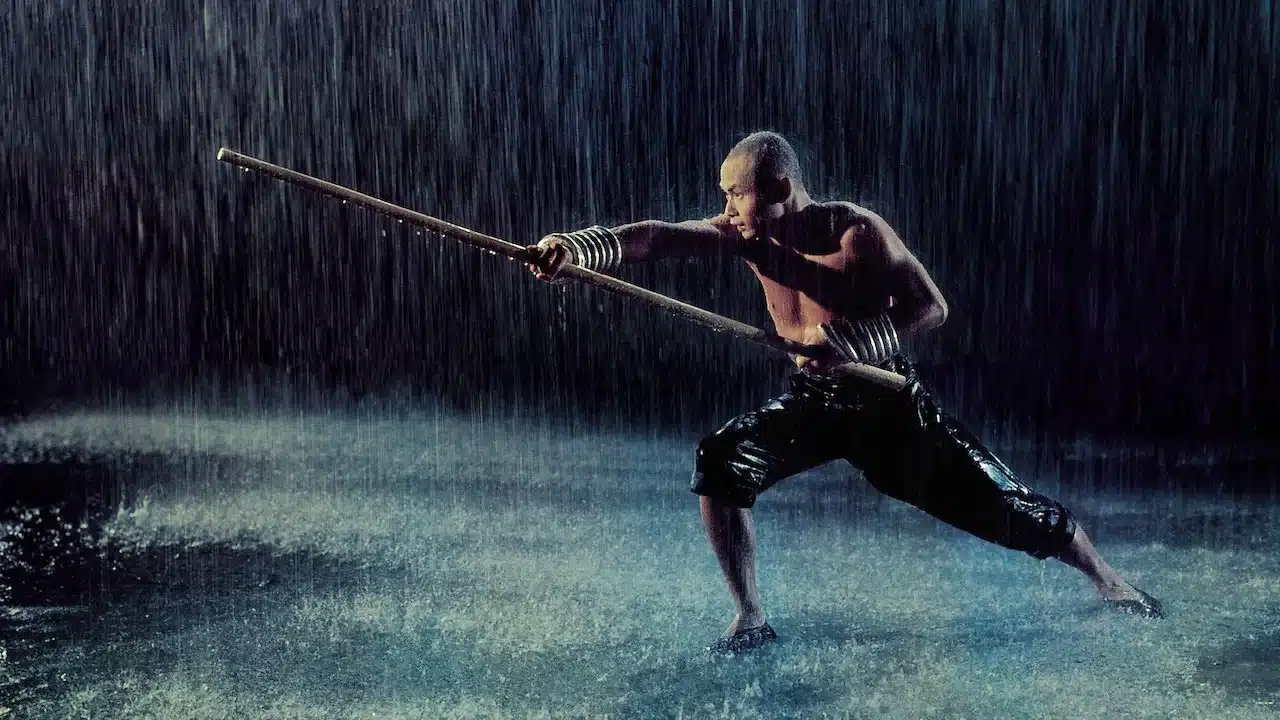
From an acting standpoint, the 36th Chamber of Shaolin holds up well, even if it occasionally veers into slight overacting. This is almost to be expected in a production like this, and personally, I would’ve been disappointed if it didn’t deliver on this front. Ultimately, it’s the martial arts scenes that take center stage.
A film that definitely leaves you wanting more!